
How Does a Soft Robotic Gripper Support Flexible Manufacturing?
September 19, 2026 - 0 COMMENTS

Manufacturing needs to adapt quickly as customer demands, product designs, and production volumes continue to change. Traditional automation often works best when factories produce the same item repeatedly. However, modern businesses increasingly handle different product sizes, shapes, materials, and packaging requirements. This shift has created a strong need for flexible automation.
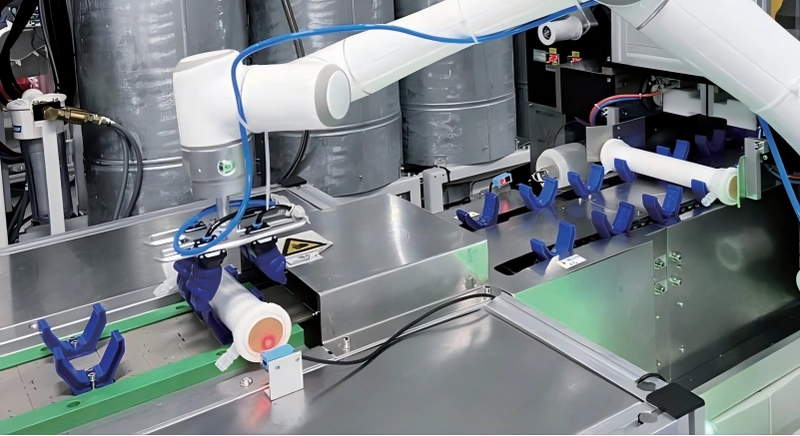
A Soft robotic gripper helps manufacturers respond to these changing requirements. Unlike rigid robotic fingers, soft grippers can deform around objects and provide gentle contact. This flexibility allows robotic systems to handle products that may be delicate, irregularly shaped, or difficult to grasp with conventional tooling.
Flexible manufacturing also reduces the need for frequent equipment changes. Instead of designing a separate rigid gripper for every product, manufacturers can use adaptable gripping technology to handle multiple items. This approach can improve production efficiency while supporting greater product variety.
How Does a Soft Robotic Gripper Handle Different Product Shapes?
One of the biggest advantages of a Soft robotic gripper is its ability to adapt to different shapes. Traditional robotic grippers typically rely on fixed jaws or fingers. These components work effectively when an object has predictable dimensions, but they may struggle with soft, uneven, or irregular products.
Soft grippers use flexible materials and specialized actuation methods to conform to an object’s surface. When the gripper closes around a product, its fingers can bend and adjust instead of applying pressure at only a few rigid contact points.
This design makes Soft gripping useful for applications involving food, consumer goods, agricultural products, packaging, and other products with varying shapes. Manufacturers can move between different product types with fewer mechanical adjustments.
Why Is Soft Gripping Useful for Delicate Products?
Many products require careful handling because excessive force can cause dents, scratches, crushing, or other damage. Rigid robotic tools may apply concentrated pressure, especially when they cannot perfectly match an object’s shape.
Soft gripping provides a gentler alternative. Flexible fingers distribute contact across a larger area, helping the robotic system hold products without relying on excessive gripping force.
For example, a production line may need to pick fruits, vegetables, packaged food, or lightweight consumer products. These items can vary in shape and firmness. A flexible gripper can adapt to those differences while maintaining a secure hold.
This capability can reduce product damage and support consistent quality. It also helps manufacturers automate processes that previously required manual handling.
How Can Soft Robotic Grippers Reduce Changeover Time?
Product changeovers can consume valuable production time. When a factory switches from one product to another, workers may need to replace tooling, adjust machine settings, or install different robotic end effectors.
A Soft robotic gripper can reduce some of these challenges because one adaptable gripping system may handle several product types. Instead of changing rigid fingers for every product variation, operators can use the same flexible tool across a broader range of tasks.
This flexibility can support shorter changeover processes. Faster changeovers allow manufacturers to produce smaller batches without sacrificing as much operating time.
For businesses responding to seasonal demand or customized orders, this capability can become particularly useful. The production line can adapt more easily when product requirements change.
Can Soft Gripping Improve Automation Efficiency?
Automation works best when robots can perform tasks consistently and reliably. Picking and placing objects becomes more difficult when products vary in size, orientation, or surface characteristics.
Soft gripping helps address these challenges by allowing robotic end effectors to accommodate variations. A flexible gripper can maintain contact with an object even when its shape differs slightly from the expected dimensions.
This adaptability can reduce failed picks and unnecessary interruptions. It can also help manufacturers automate processes that would otherwise require constant human adjustment.
When combined with machine vision, sensors, and intelligent control systems, soft grippers can become part of a responsive automation solution. Vision systems identify products, while the robot positions the gripper and applies an appropriate gripping action.
How Does a Soft Robotic Gripper Support Product Variety?
Product variety has become an important part of modern manufacturing. Businesses may offer different sizes, packaging formats, colors, or product configurations to meet customer preferences.
Rigid automation systems often require dedicated tooling for each variation. This can increase equipment costs and complicate production planning.
A Soft robotic gripper offers greater adaptability. Its flexible structure can accommodate products with different dimensions without requiring extensive mechanical redesign.
For example, a single robotic workstation may need to pick several packaging formats from a conveyor. A flexible gripper can potentially handle these products within the same workflow.
This versatility supports manufacturers that want to increase product variety while maintaining automated production.
What Role Does Soft Robotics Inc Play in Soft Gripping Technology?
Companies developing soft automation technologies continue to improve how robots interact with real-world objects. Soft Robotics Inc has helped bring soft gripping concepts into industrial automation by focusing on adaptable robotic handling.
Soft robotic technology can help manufacturers address common challenges associated with variable products. Flexible gripping systems can support picking, placing, sorting, and packaging applications where conventional rigid tooling may have limitations.
The broader goal of this technology is to make automation more adaptable. Instead of forcing every product to match a machine’s fixed mechanical design, flexible gripping allows the automation system to better accommodate the products it handles.
How Can Soft Robotic Grippers Support Food Manufacturing?
Food manufacturing presents unique automation challenges. Products can be fragile, irregular, slippery, or inconsistent in shape. Fresh produce, baked goods, packaged foods, and other products often require careful handling.
Soft gripping can provide the flexibility needed for these applications. A soft gripper can conform to a product rather than relying on rigid contact points. This can help robots pick and move products while reducing unnecessary pressure.
Manufacturers can also benefit from improved product handling consistency. Automated gripping can perform repetitive tasks at a steady pace, helping production teams maintain throughput while reducing manual handling requirements.
Can Soft Robotic Grippers Help Manufacturers Scale Production?
Scaling production often means increasing output without creating excessive complexity. A rigid automation system may require additional tooling as product variations increase.
A Soft robotic gripper can provide a more adaptable foundation for scaling certain automated processes. One gripper may support several products, allowing manufacturers to expand production while limiting the number of specialized end effectors required.
This flexibility can also support gradual automation. A business can introduce robotic handling into one process and later adapt the same technology for additional products or tasks.
Such adaptability can make automation easier to integrate into changing production environments.
What Are the Main Benefits of Soft Gripping for Flexible Manufacturing?
The benefits of Soft gripping extend beyond simple object handling. Flexible grippers can support several important manufacturing goals, including:
- Handling products with different shapes and sizes
- Reducing the risk of damage to delicate items
- Supporting faster product changeovers
- Increasing automation flexibility
- Reducing dependence on specialized rigid tooling
- Supporting product customization
- Improving robotic handling of irregular objects
- Helping automate tasks that require gentle contact
These advantages make soft gripping an increasingly relevant technology for manufacturers seeking adaptable automation.
How Can Manufacturers Integrate Soft Robotic Grippers Into Existing Systems?
Manufacturers do not always need to redesign an entire production line to introduce soft gripping. A robotic gripper can serve as an end-of-arm tool within an existing robotic cell.
Companies can begin with a specific task, such as picking products from a conveyor, loading packaging, or sorting items. Engineers can then evaluate gripping performance, cycle time, product protection, and integration requirements.
Sensors and machine vision can further improve the system. Vision technology can identify product location and orientation, while robotic controls coordinate movement and gripping.
Soft Robotics Inc represents the type of technology provider helping industries explore more adaptable robotic handling solutions.
Why Is a Soft Robotic Gripper a Valuable Tool for the Future of Manufacturing?
Manufacturing continues to move toward greater flexibility, customization, and automation. Companies need systems that can handle changing product requirements without creating unnecessary complexity.
A Soft robotic gripper addresses this need by combining robotic automation with flexible physical interaction. Its ability to adapt to different shapes and handle delicate products makes it suitable for a wide range of applications.
As manufacturers adopt smarter robots, machine vision, and sensor-based controls, Soft gripping can become an important part of flexible production systems. It allows robots to interact with products more naturally while supporting efficient and adaptable workflows.
Ultimately, flexible gripping technology can help manufacturers build automation systems that respond more effectively to real-world production challenges. By reducing tooling limitations and improving product handling, soft robotic grippers can support a manufacturing environment where variety, efficiency, and adaptability work together.
 AUTHOR
SHANE DOE
Hello!! My name is SHANE DOE, I’m glad if you are reading this, which means you are someone who likes the environmental, construction, business, electronics, and lifestyle-related blogs because this is what our website delivers about. I hope you enjoyed it all.